
Storms & safety
Tree fell on house in Boise: what to do first
Short answer
When a tree fell on house or a heavy limb punched through the roof, keep everyone away from the tree and any wires, treat every line as live, and call Idaho Power if a line is involved. Then take photos from a safe spot and call for emergency tree removal. A tree branch fell on house jobs and a fallen tree on the roof are handled the same way: clear the area first, then get the wood off the structure.
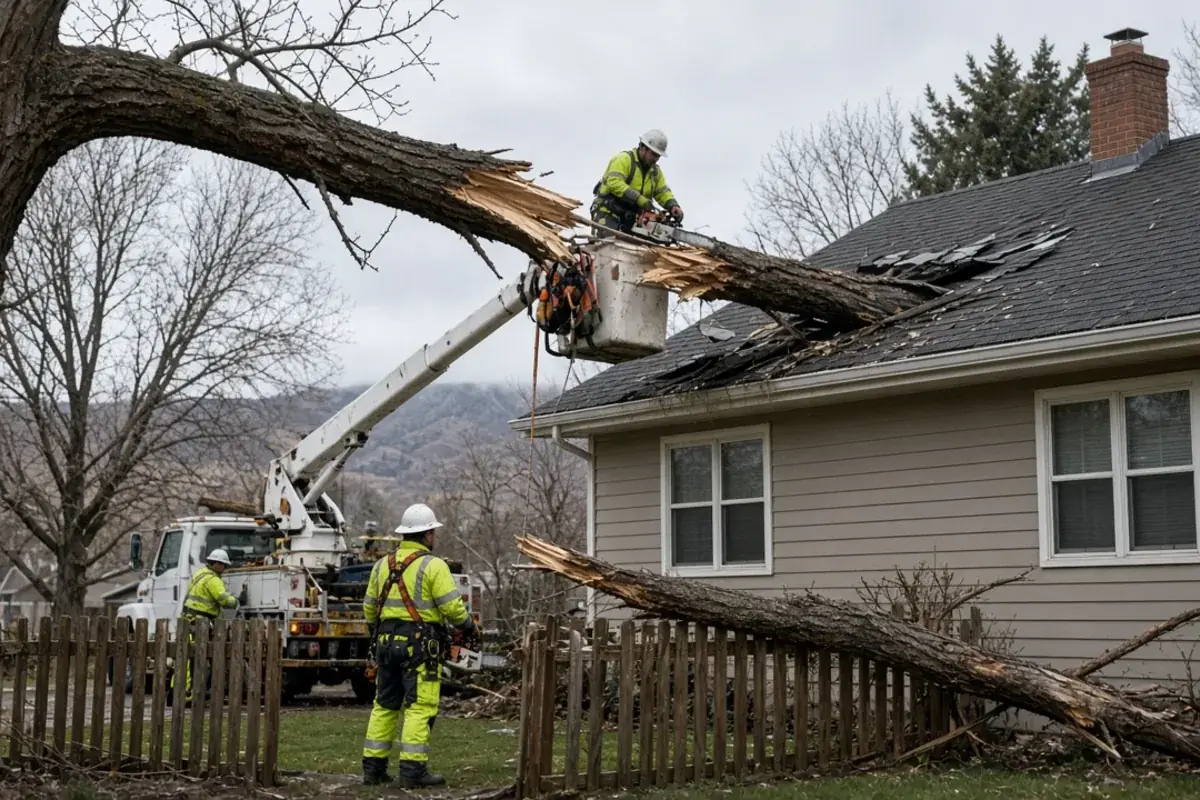
Tree fell on house: your first 15 minutes
Boise’s spring winds and winter wet snow drop trees and limbs onto roofs every year. When a tree fell on house siding or the roof, the order of work matters more than the cleanup.
Stay outside the fall zone. Don’t walk under the canopy, climb onto the roof or try to cut anything yourself. A trunk that’s bent, pinned or resting on the house can still move.
- Get people and pets out from under the tree and away from the house if the structure looks unstable.
- Look for lines. If a wire is down, sparking or draped over the tree, stay back and call Idaho Power or 911. Don’t assume a quiet line is dead.
- From a safe distance, take photos of the whole tree, the roof or wall, and any interior damage.
- Call for emergency tree removal. We answer 24/7.
- If the only way out of the driveway is blocked, say so when you call.
Fallen tree on the roof vs a branch on the house
A whole tree on the roof and a heavy limb through the fascia are different jobs, but the first steps are the same. Don’t shake the limb, pull on it or cut the free end. Relieving the wrong side of a loaded branch can drop the rest onto the roof or into the room below.
Tell the crew whether the roof is leaking, whether a bedroom is under the impact and whether the trunk is still attached to the stump. That changes how we stabilize and remove it.
If the tree is on a power line
Idaho Power owns the lines in the public right-of-way. If a tree or limb is resting on a line, or a line is down in your yard, call them first. Private tree crews don’t touch energized lines.
Once the utility has made the site safe, we can cut and remove the wood. Our guide to trees near houses and power lines explains who handles which part of the job.
How emergency removal of a tree on a house works
Most of the time we take the tree apart in sections, starting with anything still under tension. Pieces that rest on the roof are cut short, cushioned and lowered so they don’t tear more shingles or push into the attic.
After the wood is clear, we tidy the yard to the scope you agreed on. The stump is usually left for a later visit unless you ask to add grinding or full stump removal the same day. See what to expect on a removal day for the planned version of this work.
Call us day or night. Keep everyone clear of the tree and any wires until help arrives.
Photos, claims and what we can tell your insurer
Take photos before anything is moved if you can do it safely. Insurers often want the “before” view of a tree that landed on a covered structure.
We can describe the work we did on an invoice. We don’t write claim letters or decide what your policy covers. Policies vary. For a plain-language overview, see does insurance cover a fallen tree in Idaho.
What can wait and what can’t
| Situation | Usually urgent | Can often wait |
|---|---|---|
| Tree or heavy limb on the roof or wall | Yes | - |
| Tree blocking the only driveway exit | Yes | - |
| Split trunk still standing over the house | Yes | - |
| Limb in the yard, clear of the house and lines | - | Yes, as a planned visit |
| Tree down in an open side yard | - | Yes, once the site is safe |
Why Boise trees end up on roofs
Silver maple, Siberian elm and cottonwood are common around older North End, Hyde Park and West Bench lots. They grow fast, carry heavy wood and fail more often in wind or wet snow. A tree that looked fine in August can drop a limb in a March storm.
If your tree is still standing but cracked, newly leaning or dropping large limbs, read signs a tree needs to be removed and is a leaning tree dangerous before the next storm does the deciding for you.
FAQ
Common questions
What should I do if a tree fell on my house?
Keep people away, check for power lines, take photos from a safe spot and call for emergency tree removal. Don’t cut a loaded limb or climb onto the roof.
Who do I call if a tree is on a power line in Boise?
Call Idaho Power or 911 first. Private crews don’t work on energized lines. Once the utility clears the site, we can remove the wood.
Can you remove a fallen tree on the roof the same day?
Often yes. We answer 24/7. Timing depends on how the tree is loaded, weather and whether the utility has to go first.
Should I move the tree myself?
No. A tree resting on a house can shift when you cut the wrong place. Leave sectional cutting and lowering to a crew with the right gear.
Will my insurance pay for a tree that fell on the house?
Sometimes, when a covered structure is damaged. Policies vary, so ask your insurer. We can provide an invoice for the work we did.