
Boise neighborhood
East End Boise tree service from the river to Table Rock
The East End runs from flat blocks by the river to steep lots below Table Rock. What ties it together is old, large trees that most owners would rather keep, and most tree service in the East End is about doing that safely.
Local notes
Terrain and trees
The East End stretches east from downtown past the Old Idaho Penitentiary and the Idaho Botanical Garden, with the Military Reserve and Table Rock above and Kristin Armstrong Municipal Park and the Greenbelt along the river below. Warm Springs Avenue runs through the middle and has its own page (see below).
Up the slope you find mature shade trees mixed with pines, spruce and junipers. Along the river, cottonwoods and willows grow huge and drop limbs without much warning. In between are older homes with large silver maples and elms over the roof.
On the job
Retaining walls, steep driveways and wildland edges
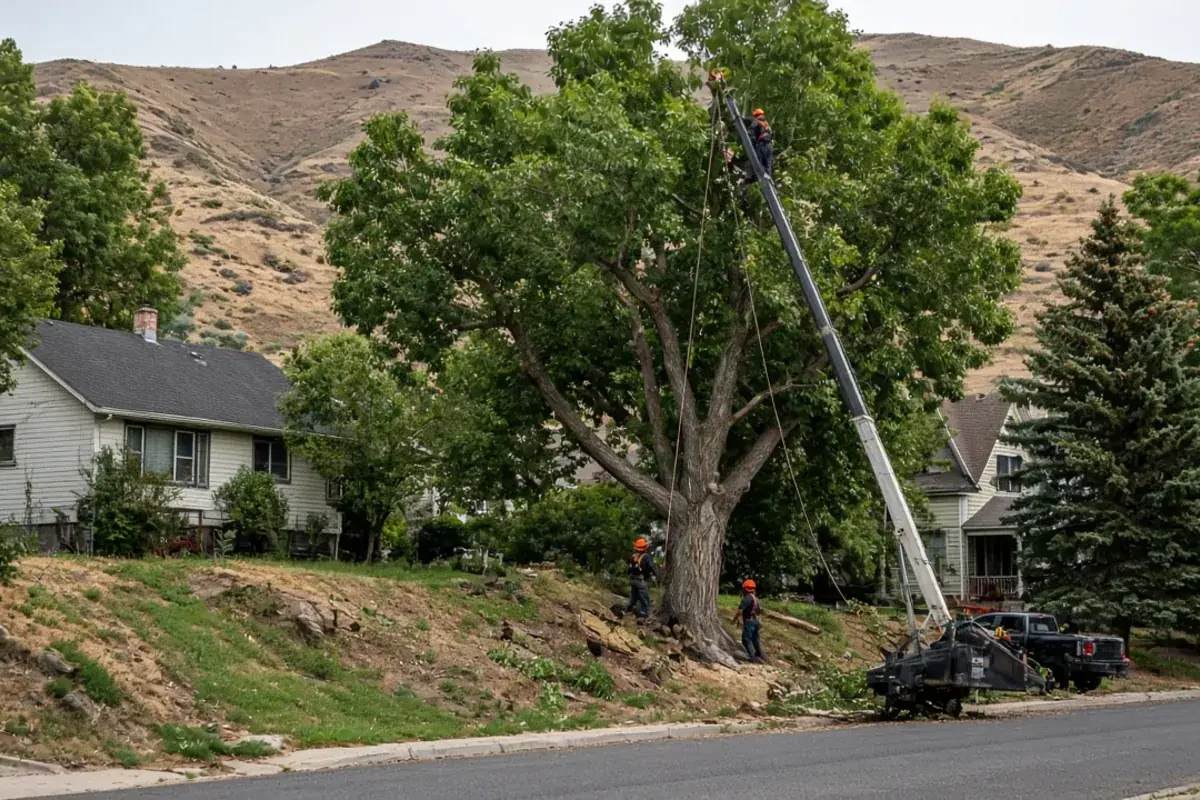
Many East End lots step up the hill on terraces and retaining walls. That limits where a truck can park and where wood can land, so pieces are often roped down and carried out by hand. On the highest streets, homes back onto open hillside covered in grass and brush, and Boise Fire’s wildfire guidance applies: keep the first five feet around the house clear of anything that burns, and lift branches off the roof.
Common East End requests are deadwood removal and weight reduction on big shade trees, clearing limbs off roofs and chimneys, and storm cleanup after the spring and fall winds that come down off the foothills.
Common questions
East End tree questions
Is my East End lot too steep for tree work?
Usually not. We climb and rig rather than drive equipment onto slopes, and we can lower wood down the hill in controlled pieces. A site visit lets us plan where each piece will land.
Do I need a permit to work on a tree in the East End?
A street tree in the planting strip needs a Boise Community Forestry permit. Ordinary private trees usually don’t, unless it’s an elm: Boise City Code 7-2-9 requires a free City Forester permit for any elm work, public or private.
Should I thin the pines behind my house for fire safety?
If they touch the roof or form a solid band of fuel to the hillside, yes. Lifting the lowest limbs and opening gaps between crowns lowers the chance that a grass fire climbs into the trees. We can mark which trees to prune and which to remove.
Talk to us about your tree
Big tree over the house in the East End? Call us.
Let us know your street, whether the yard is sloped and what changed with the tree.