
Boise neighborhood
Warm Springs Boise tree service along the historic avenue
Warm Springs has some of the largest, oldest trees in the city. The houses along the avenue sit well back on deep lawns under a canopy planted more than a century ago, and tree service in Warm Springs is mostly about keeping that canopy healthy.
ZIP 83712
Local notes
History under the lawn
The Warm Springs Avenue Historic District lines the avenue east of downtown in ZIP 83712. It was listed on the National Register in 1979 and designated locally by Boise in 1996. In 1892 the homes here became part of the nation’s first geothermal district heating system, and the Boise Warm Springs Water District still pipes hot water to customers in the East End today.
That history is practical for tree work. Hot-water service lines can run under front lawns and side yards, so we ask about them before any stump removal or digging, in addition to calling 811. The broad, tree-lined parkways along the avenue are mostly City street trees.
On the job
Big lawns, old canopy and the river edge
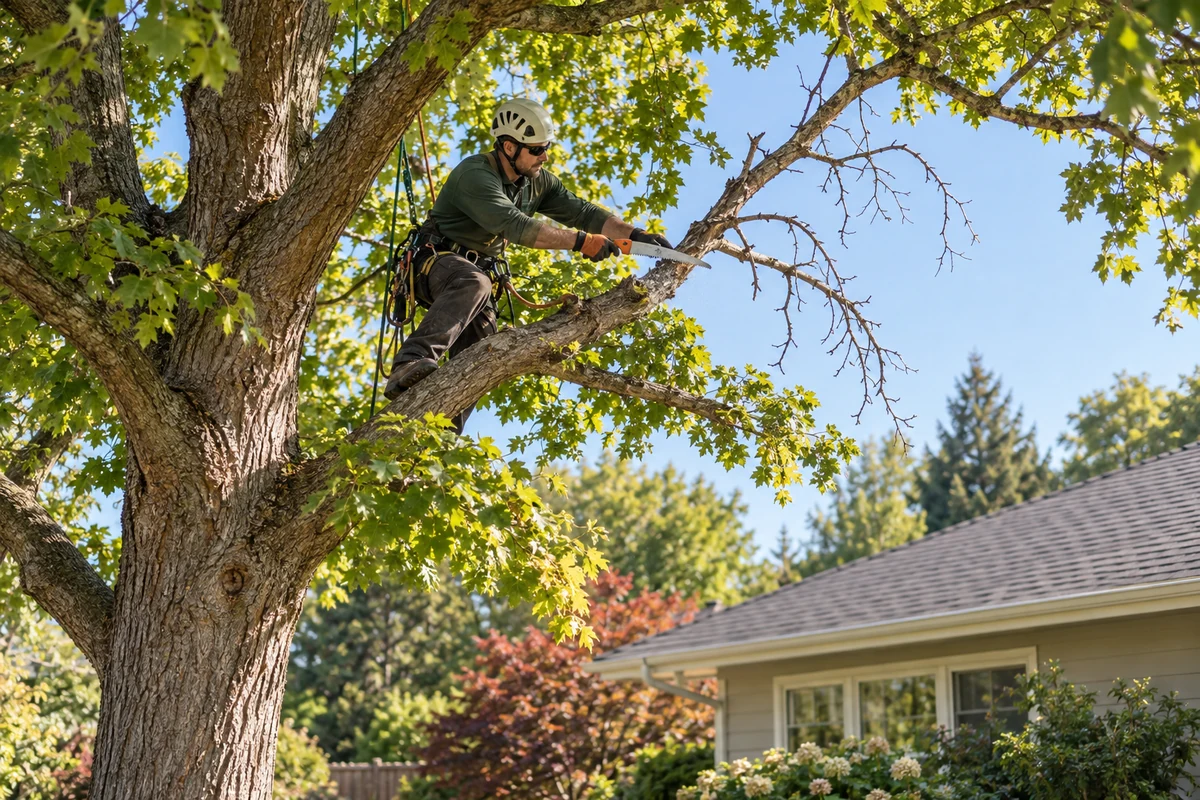
Lots here are larger than in most of central Boise, which makes access easier but the trees much bigger. Mature silver maples, elms and other large shade trees often have long horizontal limbs over the house or driveway, and preserving them usually means careful reduction and deadwood removal rather than heavy cutting.
South of the avenue the Warm Springs Golf Course follows the Boise River, and properties near the water deal with cottonwoods and willows that grow fast, lean toward light and shed limbs. Trees on the public Greenbelt and park side belong to the City, so we only work on the private side of the line.
Common questions
Warm Springs tree questions
Can you work near the geothermal lines in my yard?
Yes, with care. Tell us where your service line enters the house if you know. We keep grinders and diggers clear of it, and pruning and removal above ground do not affect it.
Does the historic district limit tree work?
The district itself mainly governs buildings. Street trees still need Community Forestry approval, and elms anywhere need a free City Forester permit under Boise City Code 7-2-9.
A cottonwood on our river side is leaning. Is it dangerous?
A slow lean that has been there for years is often stable. A new lean, cracked soil or lifting roots on the opposite side is a warning sign, especially in wet soil near the river. We can check it and tell you which it is.
Talk to us about your tree
Concerned about a big tree on Warm Springs Avenue? Call us.
Tell us the block and what you’re seeing in the tree, especially after wind or snow.