
Tree health
Is a leaning tree dangerous?
Short answer
Is a leaning tree dangerous? Not always. Plenty of Boise trees have leaned for decades and stay that way. The lean to worry about is one that’s new, getting worse, or paired with cracked soil, lifting roots or a tree leaning toward the house over a roof, driveway or play area. When those show up together, get the tree checked soon.
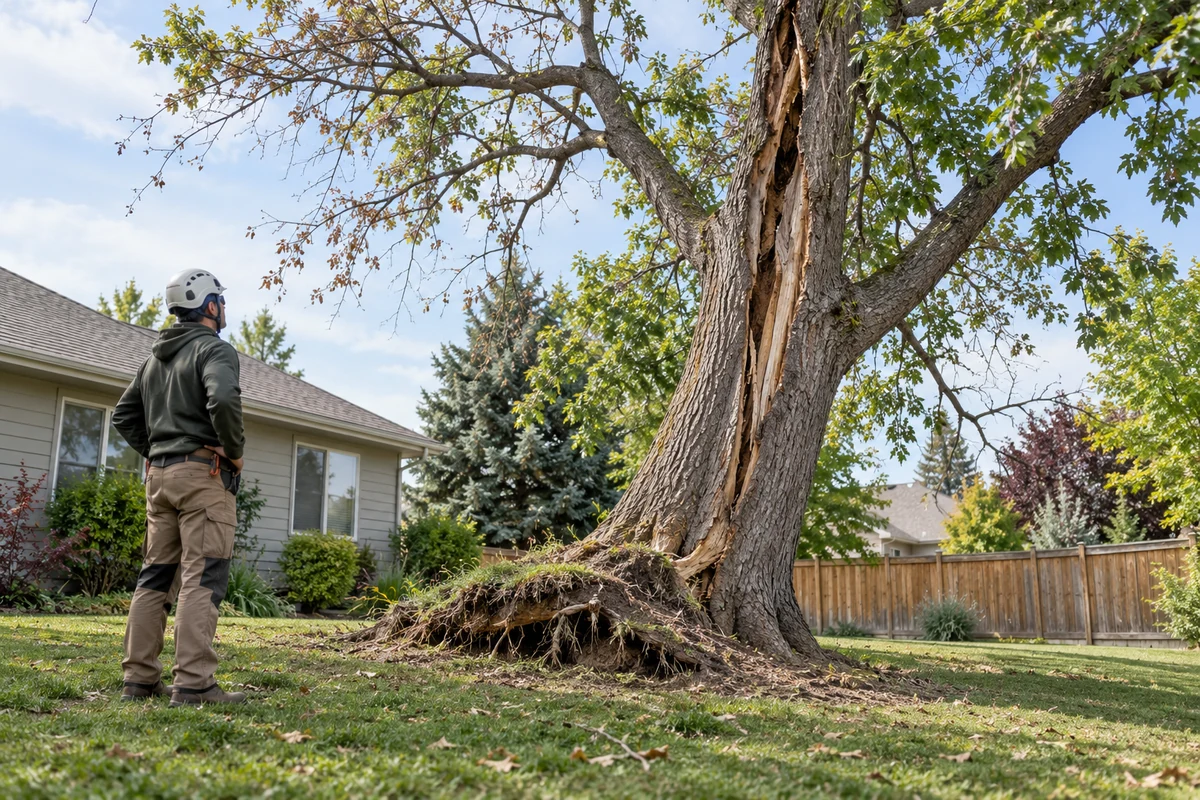
Leans that are usually stable
Trees grow toward light. On a North End lot shaded by the house, or a West Bench yard with prevailing wind, a trunk can develop a permanent lean and still be sound. Look for a root flare that sits firmly in the ground, no fresh cracks in the soil and a canopy that leafs out evenly.
A long-standing lean with no other defects is often a keep-and-monitor tree, not an emergency.
Is a leaning tree dangerous? Warning signs to check
So is a leaning tree dangerous in your yard? Use this list. Any one item is a reason to look closer; two or more is a reason to call.
- The lean is new, or photos from last year show it has increased.
- Soil on the opposite side of the lean is cracked, heaved or mounded.
- Roots are pulling up out of the lawn.
- The trunk has a fresh crack, a bulge or a hinge of crushed wood on the compression side.
- Large limbs have started to die on the high side of the lean.
- The tree is leaning toward the house, garage, street or a power line.
A tree leaning toward the house in Boise deserves extra attention even when the lean itself is old, because the target is a roof or an exit path.
Tree leaning toward the house in Boise
A tree leaning toward the house raises the stakes even when the lean is old. Failure would land on bedrooms, the living room or the only exit. After a windy night or a heavy wet snow, walk the yard and look at the soil line on those trees first.
If you see soil movement or a sudden change, keep people and cars out from under the canopy and call. Our emergency tree removal page covers same-day help when the tree won’t wait.
How we check a leaning tree
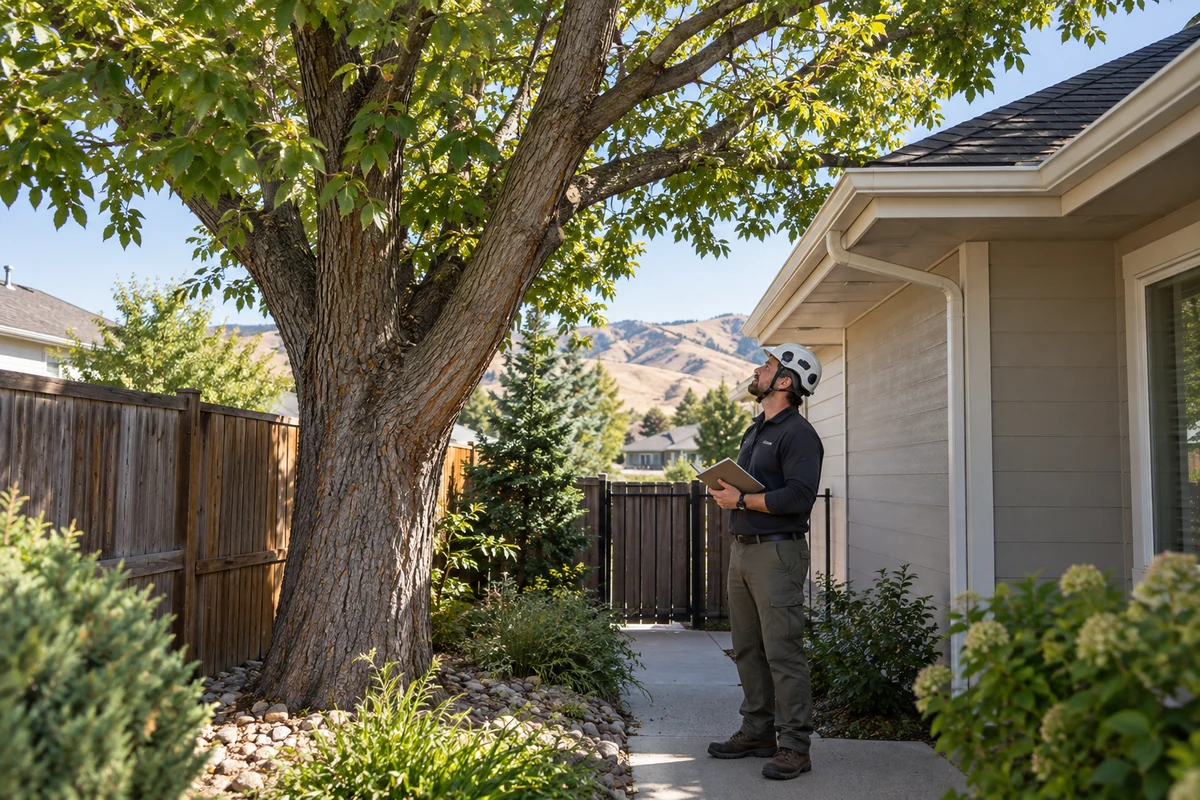
A visit starts with the whole tree: roots, trunk, unions and the target underneath. We look for decay, weak forks and whether the lean is rooted in a soil failure or just the way the tree grew.
Sometimes the answer is monitoring or pruning to reduce sail. Sometimes it’s a planned tree removal. An arborist tree check is the right first step when you’re not sure.
Boise trees that lean and fail more often
Silver maple, Siberian elm and cottonwood show up again and again in lean-and-fail calls. They grow fast, build heavy crowns and shallow roots in irrigated lawns, then catch wind like a sail. Ornamental pears are known for splitting at tight forks and then leaning hard to one side.
None of that means every maple must come down. It does mean an older one leaning toward the house deserves a closer look than a young ornamental in an open corner of the yard.
Send a photo that shows the whole tree and the base. We’ll tell you whether it looks like a monitor, prune or remove.
After wind or wet snow
Boise’s spring fronts and winter “wet dump” snow events are when leans change overnight. If you hear a crack, see a new tilt or find soil lifted opposite the lean, treat it as urgent.
A tree that’s already resting on a fence or roof is past the “is it dangerous” question. See tree fell on house and storm-damaged tree help.
What to do next
- Compare the tree to a photo from last season if you have one.
- Check the soil line all the way around the base.
- Note what’s under the lean: roof, driveway, play set, sidewalk, line.
- Call for a check if the lean is new, worsening or aimed at the house.
- If the tree needs to come down, ask for a written plan that covers access, sectional cutting and the stump.
What a lean check and removal usually involve
A check is a walk-around and a conversation. We look at the base, the unions and what’s underneath, then tell you keep, prune or remove. If removal is the answer, the quote covers access, sectional cutting, cleanup and whether the stump is included.
For pricing context on removals in general, see tree removal cost in Boise. Leaning trees next to houses are rarely the cheapest jobs, because they come down in pieces.
FAQ
Common questions
Is a leaning tree dangerous?
It can be, especially if the lean is new, increasing or paired with soil heaving and a target underneath. An old, unchanged lean is often stable.
Can a leaning tree be straightened?
Usually no once it’s mature. Staking is for young trees. Mature leans are managed by pruning, monitoring or removal.
How fast can a leaning tree fall?
Some move slowly over months. Others fail in a single storm once roots lose their grip. New soil movement is a reason to act sooner.
Should I remove a tree leaning toward my house?
Not automatically. Get it checked. Removal makes more sense when the lean is unstable or the tree has other serious defects.
Who should I call in Boise?
For a standing tree you’re unsure about, start with a tree check. If it’s already failing onto a structure, call emergency tree removal.