How tree removal works
What happens during a tree removal, step by step
Most removals follow the same pattern. Someone looks at the tree and the site, you agree on a plan and what is included, then the crew sets up, takes the tree down in a controlled way, cleans up and deals with the stump if that is part of the job. Knowing the steps makes it easier to prepare and to compare estimates.
Updated October 2, 2026
Step one: the site visit and estimate
A useful estimate starts with someone looking at the tree in person. They will check its size, condition and lean, and just as importantly what is around it: the house, fence, lines, driveway, landscaping and how a crew can get in. That is how tree removal in Boise gets matched to the actual site rather than a guess.
The estimate should spell out the scope in plain terms: which tree or trees, whether wood is hauled away or left in rounds, whether brush is chipped, how the stump is handled and what cleanup is included. Our guide to tree removal cost in Boise explains what changes that scope.
Permits and approvals
Before a date is set, sort out any approvals. Trees in the planting strip along the street are generally city street trees managed by Boise Community Forestry. Many HOAs, including those in Harris Ranch, Columbia Village and parts of West Boise, have their own approval rules, and the City of Boise notes that properties in historic districts may need a Certificate of Appropriateness for tree removal. Our Boise tree permit guide covers the common cases.
If the tree is near the wire running to your house, the utility may need to be involved first; see removing a tree near a house or power lines.
How to prepare your yard
A little preparation saves time on the day. Move cars out of the driveway, and off the street in front of the house if the crew will need the space. Clear patio furniture, grills, planters, toys and decorations from the work area. Unlock gates and plan to keep pets inside.
Mark sprinkler heads, low-voltage landscape lighting and anything buried near the tree, and mention septic systems or soft areas. It is courteous to let your neighbors know too, since there will be noise from saws and a chipper for part of the day and trucks may be parked along the street.
On the day: setup and takedown
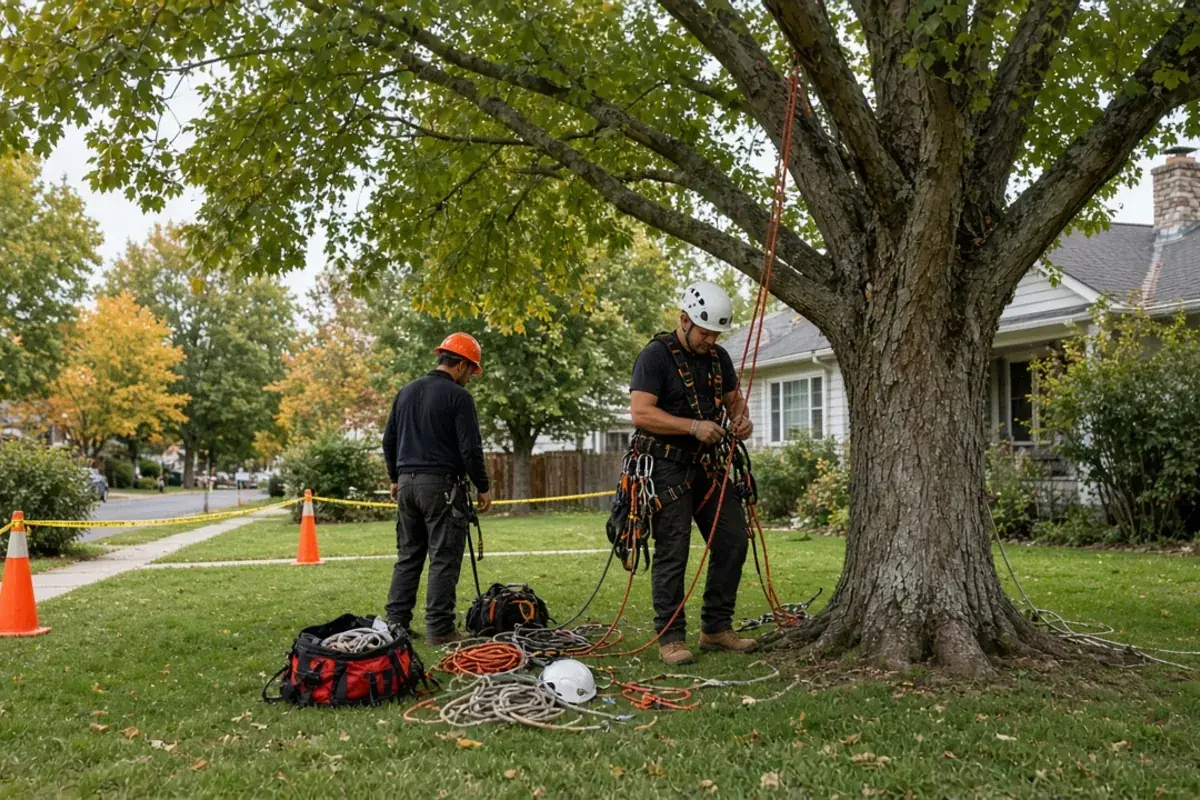
When the crew arrives, they usually walk the site with you, confirm what is being removed and set up the work zone, often with cones or tape to keep people out. Ground protection may go down along the route used to drag brush to the chipper.
How the tree comes down depends on the space. In an open yard it may be felled in one piece in a planned direction. More often in Boise neighborhoods it is taken apart from the top, with branches cut and lowered and the trunk removed in sections. Brush goes through the chipper as the work goes, and larger wood is cut into rounds.
How long it takes
A small or medium tree with easy access can often be removed in a few hours. A large tree, a tree over a house, or several trees on one property can take a full day or more. Weather, narrow gates and side yards, and how much material has to be carried out all play a part. Ask for a realistic time window when you book so you can plan around it.
Cleanup, wood and the stump
Cleanup should be agreed on in advance. Most jobs end with brush chipped and hauled away and the area raked and blown off, but you may want to keep wood chips for mulch or logs for firewood. The stump is usually cut low and left in place unless stump grinding or fuller stump removal is part of the job. If you are not sure which suits the space, see stump grinding vs stump removal, and call 811 before any grinding so buried utilities can be marked.
If you want to replace the tree, think about the new spot before the stump work is done. A location a few feet away from the old stump, and well clear of the house and lines, is usually easier. Our tree planting page covers choosing and placing a replacement.
The best time of year for tree removal in Boise
Dead, damaged or hazardous trees should not wait for a particular season. For planned removals, though, late fall and winter are often a good fit. With the leaves off there is less material to handle and the tree's structure is easier to see, and firm or frozen ground can be easier on lawns than soggy spring soil. Late winter also comes before the main bird nesting season; active nests of most native birds are protected under federal law, so spring and early summer jobs may need a nest check first.
Summer removals are perfectly possible too, though heat and dry, dusty yards are part of the picture. If you are not sure the tree needs to come down yet, read signs a tree needs to be removed first, or our remove-or-save guide. When you are ready, our Boise tree removal service page explains how we plan the work, and we serve neighborhoods across the city, including Harris Ranch and West Boise.
Common questions
A few things people usually want to know
How long does it take to remove a tree?+
A small or medium tree with easy access may take a few hours. Large trees, trees over structures or jobs with several trees can take a full day or longer.
Do I need to be home during tree removal?+
Not always, but it helps to be there at the start to walk the site and confirm the plan. Make sure gates are unlocked and pets are inside.
Is the stump removed as part of tree removal?+
Not automatically. The stump is usually cut low and left unless stump grinding or stump removal is included, so confirm this in the estimate.
What is the best time of year to remove a tree in Boise?+
For planned removals, late fall and winter are often convenient because the leaves are off and the ground is firmer. Hazardous trees should be dealt with whenever they are found.
What happens to the wood after a tree is removed?+
Brush is usually chipped and hauled away. Larger wood can be hauled off or left in rounds if you want to keep it. Agree on this before the job starts.
Keep reading
More tree removal guides
Signs a tree needs to be removed
Dead canopy, cracks, a new lean, decay and the Boise trees that tend to fail first.
Storm-damaged tree removal in Boise
What to do first after wind or snow damages a tree, from power lines to insurance.
Removing a tree near a house or power lines
How sectional removal works and how Idaho Power lines change the plan.
Remove or save a tree?
How to decide between trimming, pruning and removal for a problem tree.
How much does tree removal cost in Boise?
The factors that change the scope and price of a removal.
Tree removal permits in Boise
Street trees, Community Forestry, HOAs and other approvals to check first.
Stump grinding vs stump removal
Which stump option fits the space after the tree comes down.
Talk through the tree
Prefer to call? Start there.
If you can describe what the tree is doing, where it sits on the property and what you want to accomplish, that is enough to start the conversation. For urgent damage, mention whether the tree is leaning, split, blocking access or resting on a structure.