Stump guide
Stump grinding vs stump removal: which do you need?
Stump grinding cuts the stump down below the surface and leaves the deeper roots to break down in place. Stump removal pulls out the stump and much of the main root mass. For most lawns and garden beds, grinding is enough; full removal makes more sense when you are building, fencing or digging in that exact spot.
Updated October 2, 2026
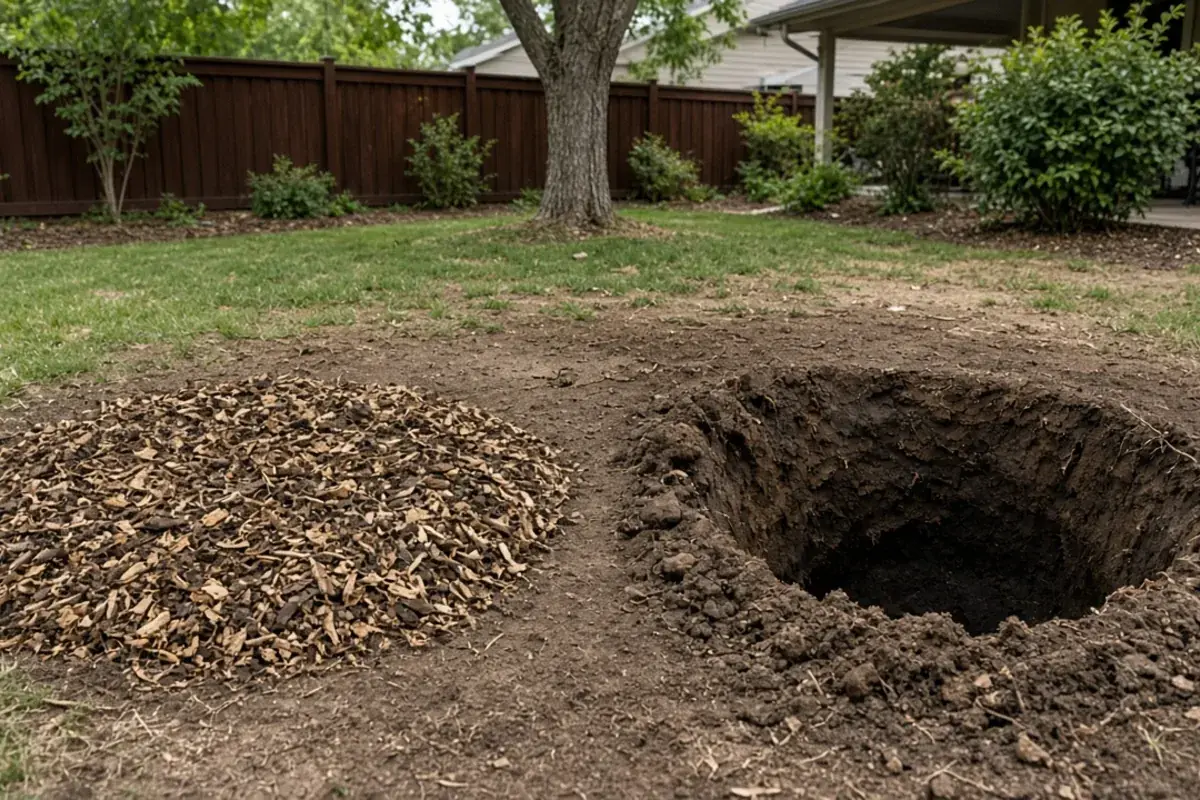
What stump grinding does
A stump grinder uses a spinning cutting wheel to chew the stump down into wood chips, usually to several inches below ground level. The visible stump disappears, and the area can be filled with soil and seeded or replanted. The roots below and around the grind area are left to decay slowly.
Grinding is less disruptive than digging. It leaves a smaller hole, works well close to fences, patios and driveways, and is usually the quicker and more affordable option.
What stump removal involves
Full stump removal takes out the stump itself along with a larger share of the main roots. It means more excavation, a bigger hole to backfill and more disturbance to the surrounding lawn or landscaping.
Removal is the better choice when the ground needs to be clear deeper down, for example before pouring a slab, setting fence posts or footings, running new irrigation or utility lines, or planting a new tree in exactly the same spot.
When grinding is enough
If the plan is lawn, a garden bed, mulch or simply getting rid of a tripping hazard, grinding usually does the job. The leftover roots break down over time, and the ground can be used normally once it has been filled and settled.
Grinding also makes sense when the stump is close to something you do not want disturbed, such as a sidewalk, driveway, foundation or a neighbor's fence.
When full removal makes more sense
Choose fuller removal when you will be digging or building where the stump was. Remaining roots can get in the way of footings and posts, and as they decay the ground can settle unevenly under pavers or slabs.
It can also help if you want to replant very close to the old trunk, since a new tree's roots will have an easier time in soil that is not full of old wood and chips.
Sprouting, settling and the chips
Some species, including cottonwoods, poplars, willows, Siberian elms and some maples, are prone to sending up suckers from the remaining roots after the tree is cut. Grinding deeper and keeping new shoots cut back usually takes care of it; persistent sprouting can be a reason to consider fuller removal.
Grinding produces a lot of wood chips mixed with soil. You can keep some as mulch, but chips are not ideal for directly reseeding lawn, so replacing them with topsoil gives better results. Expect a little settling as remaining wood decays, and plan to top up the area later.
Before any stump work
Call 811 before stump grinding or removal so buried utility lines are marked. Irrigation lines and sprinkler heads near the stump should also be flagged. For more detail, see our stump grinding and stump removal pages, or read our guide to tree removal cost in Boise if the stump is part of a larger removal.
Common questions
A few things people usually want to know
Is stump grinding or stump removal better?+
Neither is better in every case. Grinding suits most lawns and planting beds, while full removal is better when you need to dig, build or set posts in the same spot.
How deep does stump grinding go?+
Grinding typically goes several inches below ground level, enough for soil and grass or mulch. It can be taken deeper when the site needs it.
Will roots grow back after stump grinding?+
Most trees do not regrow, but some species can send up sprouts from remaining roots. Cutting the shoots back or grinding deeper usually solves it.
Can I plant a new tree where the old stump was?+
Yes, but it is usually easier to plant a short distance away, or to remove the stump and old chips more fully and replace them with good soil first.
Talk through the tree
Prefer to call? Start there.
If you can describe what the tree is doing, where it sits on the property and what you want to accomplish, that is enough to start the conversation. For urgent damage, mention whether the tree is leaning, split, blocking access or resting on a structure.