
Tree removal
What is the best time to remove a tree in Boise?
Short answer
For a healthy tree you simply don’t want any more, the best time to remove a tree in Boise is usually late fall through late winter: the leaves are off, the lawn is dormant and there’s less around the tree to damage. A dead, cracked or leaning tree over a house or walk shouldn’t wait for a season.
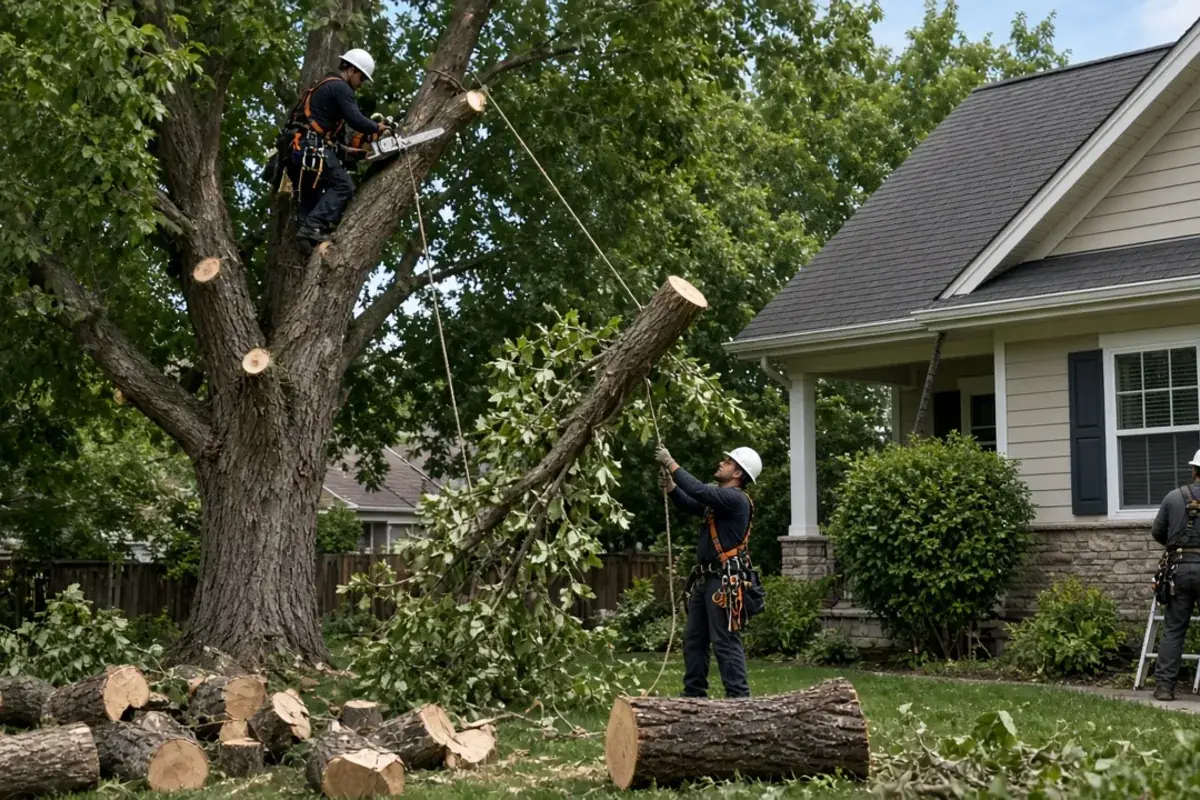
The best time to remove a tree, in short
If you’re asking about the best time to remove a tree, the honest answer depends on why it’s coming down. A healthy tree that’s simply in the wrong spot can wait for the season that suits the job and your yard. A tree that’s dead, split or newly leaning near the house can’t, and the calendar shouldn’t decide that one.
For planned work in Boise, late fall through late winter is usually the easiest window. Here’s why, season by season, and the situations where waiting is the wrong call.
Why late fall and winter are often the best time of year to remove a tree
Dormant season has a few practical advantages that have nothing to do with the tree being “asleep”:
- No leaves. A bare canopy weighs less, makes less debris and lets the crew see every limb, crack and attachment before the first cut.
- A dormant yard. Grass, perennials and shrubs are cut back or resting, so foot traffic, rigging and log drops do less visible damage than they would in June.
- Firmer ground. Cold, firm soil holds up better under equipment and leaves fewer ruts in the lawn than soft spring ground.
- Time to plan what comes next. Taking a tree out in winter leaves time to grind the stump, settle the soil and plant or reseed in the right season.
Winter isn’t perfect. Ice on limbs, deep snow over the work area or a hard freeze on a steep Foothills lot can push a day back for safety. That’s a short delay, not a reason to avoid the season.
Spring tree removal
Early spring, before leaf-out, carries many of the same benefits as winter. Once the ground thaws and the irrigation comes on, though, Boise lawns get soft, and heavy rounds dropped on wet turf leave marks. Spring is also nesting season, so it’s worth looking for active nests in the canopy before scheduling, and leaving a tree with an active nest alone for a few weeks if it’s safe to do so.
Summer tree removal
Summer removal is common and perfectly doable. The trade-off is a full canopy: more weight, more brush to chip and haul, and more of the tree hidden behind leaves. Hot afternoons also make for slower, more careful work. If a tree has to go before a summer project, like a new patio, fence or addition, summer is fine.
Fall tree removal
Once the leaves drop, fall is close to ideal. It’s also when many people first notice a problem, because a dead or dying tree stands out against healthy neighbors that are still turning color. Our fall and winter tree care checklist covers what to look at on the trees you’re keeping.
When a tree can’t wait for the best season
Timing only matters for a tree that’s stable. Don’t hold off on tree removal for a better month if you see:
- A dead tree, or a large dead section, over the house, garage, driveway or a sidewalk.
- A crack or split where two main stems meet.
- A lean that’s new, or soil heaving up on the side away from the lean.
- Fungus at the base or large areas of loose or missing bark.
- A tree or limb already resting on the roof, a fence or a car.
Our guide to signs a tree needs to come down goes into each of these. Tree Care Boise answers the phone 24/7 at (208) 504-3056, so a tree that has already failed doesn’t have to wait for business hours.
What to check before you book, whatever the season
- Elms and street trees. Boise requires a free City Forester permit before pruning or removing any elm, on public or private property, and for any work on a public tree, including trees in the strip between the sidewalk and street. Boise Community Forestry handles both. Our Boise tree removal permit guide walks through who owns which tree.
- Power lines. If the tree is growing into overhead lines, Idaho Power asks people to stay at least 10 feet away and call them at 208-388-2323 rather than cutting near the lines.
- The stump. Decide whether you want the stump ground out at the same visit. Grinding counts as digging, so underground lines are located first through Idaho Digline (call 811) at least two business days ahead.
- HOA rules. In neighborhoods like Harris Ranch, check whether your HOA wants notice or approval before a tree comes out.
If you’re still deciding whether the tree should come out at all, our remove-or-save guide is a good place to start, and what to expect on removal day covers the visit itself.
FAQ
Common questions
What is the best time of year to remove a tree in Boise?
For a healthy tree that just needs to go, late fall through late winter is usually best. The leaves are down, the lawn and beds are dormant, and frozen or firm ground holds up better under equipment.
Can a tree be removed in winter?
Yes. Trees can be taken down in winter, and leafless trees are often easier to read and lighter to handle. Very icy conditions or deep snow can push a job back a few days for safety.
Should I wait until winter to remove a dead tree?
Not if it is near the house, a driveway, a fence or a spot where people walk. Dead wood gets more brittle over time, and a dead tree is not something to leave standing through a windy season.
Do I need a permit to remove a tree in Boise?
Usually not for an ordinary tree on your own lot. Boise does require a free City Forester permit before pruning or removing any elm, on public or private land, and before any work on a street tree in the public right-of-way.