
Stumps
What to do after stump grinding
Short answer
After stump grinding, rake out most of the wood chips, fill the hole with topsoil a little above grade, water it and let it settle, then top it up and reseed, lay sod or plant. In Boise, late summer is the best window for seeding grass.
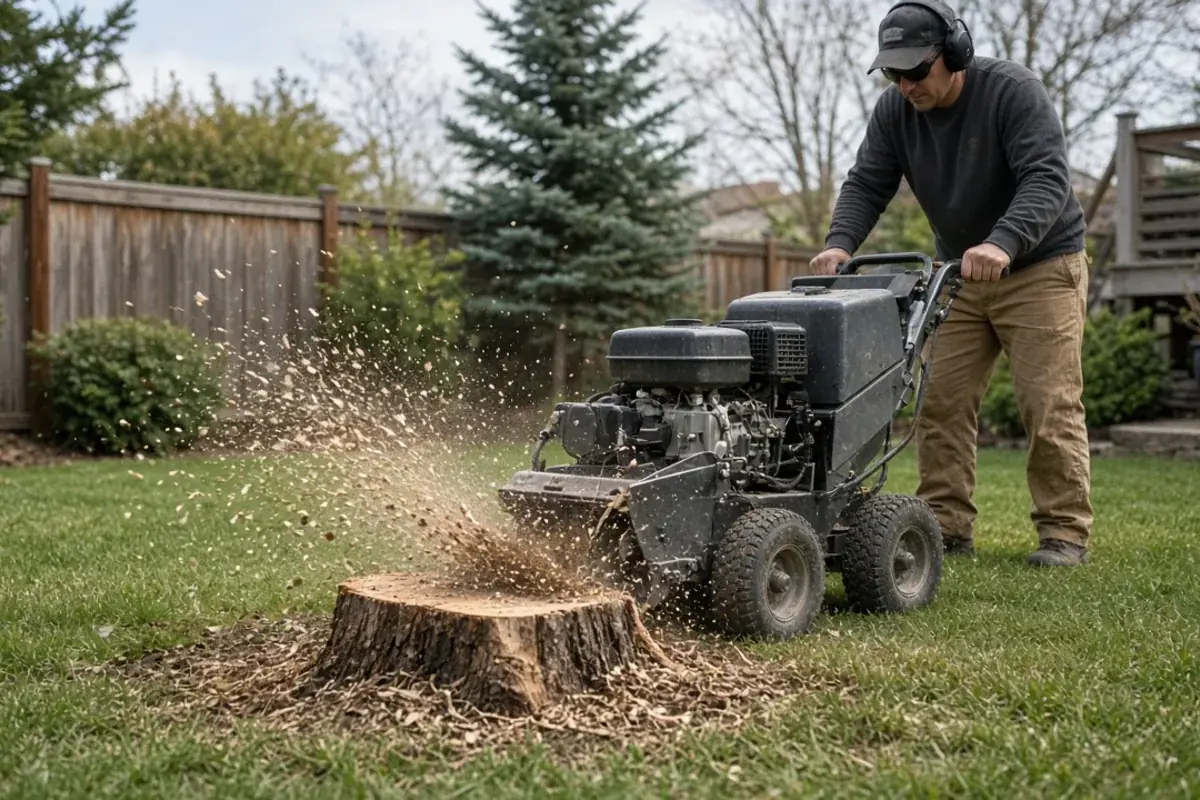
What to do after stump grinding: the first few days
Knowing what to do after stump grinding saves you a sunken patch of lawn next spring. When the grinder pulls away, you’re left with a mound of wood chips mixed with soil, and under it a shallow bowl where the stump used to be. The larger roots below grinding depth stay in the ground and break down slowly. None of that is a problem, but the spot needs a bit of work before it looks like the rest of the yard.
Start by deciding what the spot will become: lawn, a garden bed, a path or a new tree. That decides how many chips stay and how much soil you’ll need. If you’re still choosing between grinding and digging the stump out, our stump grinding vs stump removal guide compares the two.
Step 1: Deal with the wood chips
Stump grindings are a mix of wood and soil, and there are usually more of them than people expect. Rake the loose chips out of the hole and off the surrounding lawn.
- Reuse them as mulch. Spread them around trees and shrubs or on a path, a few inches deep and pulled back from trunks and stems.
- Keep them out of new lawn and vegetable beds. Fresh wood chips mixed into soil can tie up nitrogen while they break down, and grass struggles in them.
- Haul off the rest. Ask before the job whether the chips stay in a pile on site or go with the crew.
Step 2: Backfill the hole with topsoil
Once most of the chips are out, fill the hole with good topsoil. A light mix of compost is fine. Mound it slightly above the surrounding grade, firm it with your foot or the back of a rake, and give it a slow, deep watering to help it settle.
Step 3: Let it settle, then top up
Any buried chips and the old roots underneath shrink as they decay, so the spot can sink over the following months. Check it after a few heavy waterings or a wet spell, and add soil to bring it back to level. Expect to top it up more than once on a large stump. If you mow over the area, look for soft spots before you run the mower across it.
Step 4: Planting grass after stump grinding
For a lawn patch, rake the topsoil smooth, seed it or lay sod, and keep it evenly moist until it’s established. In Boise, timing matters as much as prep. University of Idaho Extension recommends seeding cool-season lawns from about mid-August to mid-September, when warm days, cool nights and fewer weeds give seedlings the best start. Spring seeding works too, with more watering and weeding through the first summer. If the stump comes out in late fall or winter, filling and settling the hole over the winter and seeding the following season works well. Sod is the quicker fix for a high-traffic spot.
Step 5: Planting a tree or bed in the same spot
Shrubs and perennials can go in once the chips are cleared and the topsoil has settled. A new tree is different. The old roots and leftover wood make it hard for a young tree to establish right on top of the stump, so plant a few feet to the side in undisturbed soil where you can. If the new tree has to go in the exact spot, digging out the root ball with stump removal may make more sense than grinding.
What to keep an eye on afterwards
- Sprouts. Cottonwood, poplar, willow, Siberian elm and some maples can send up shoots from the remaining roots for a season. Cut them off as they appear; grinding deeper usually ends it.
- Mushrooms. Fungi showing up on buried wood is part of the decay process.
- Sinking. Keep adding soil as the spot settles.
- Surface roots. Roots that ran just under the lawn may still show as ridges. They can be ground out or covered with soil.
Before the grinder shows up
Grinding a stump is digging, so buried power, gas, water and cable lines need to be marked first. Idaho Digline asks for a locate request through 811 at least two business days and no more than ten business days before digging. Point out sprinkler heads, irrigation lines and low-voltage lighting near the stump too, since those aren’t on the utility locate. If the stump is an elm or a street tree, check with Boise Community Forestry first.
When you’re ready, our stump grinding service grinds below grade so the spot can go back to lawn or beds. If the tree is still standing, tree removal and grinding can be done on the same visit. Call (208) 504-3056; the phone is answered 24/7.
FAQ
Common questions
What is left after stump grinding?
A shallow hole filled with a mix of wood chips and soil where the stump was. The larger roots below the grinding depth stay in the ground and break down slowly over the years.
Can I plant grass right after stump grinding?
Not straight into the chips. Rake out most of the grindings, fill the spot with topsoil, let it settle and top it up, then seed or lay sod. Grass grows poorly in fresh wood chips.
What can I do with the wood chips from stump grinding?
Use them as mulch around trees and shrubs or on paths, keeping them a few inches off trunks. Leave fresh chips out of vegetable beds and new lawn areas.
Can I plant a new tree where the stump was?
It’s usually easier to plant a few feet to the side, in undisturbed soil away from the old roots. If it has to go in the same spot, the stump may need to be dug out rather than ground.