
Tree health
Tree roots damaging foundation or driveway: what to do
Short answer
Tree roots damaging foundation walls or lifting a driveway are usually a slow problem that suddenly gets expensive. Roots follow water and oxygen in Boise’s irrigated yards. They can heave slabs, clog lines and press against shallow foundations. Sometimes pruning or a root barrier helps; when the tree is too big for the spot, removal and dealing with the stump is the lasting fix.
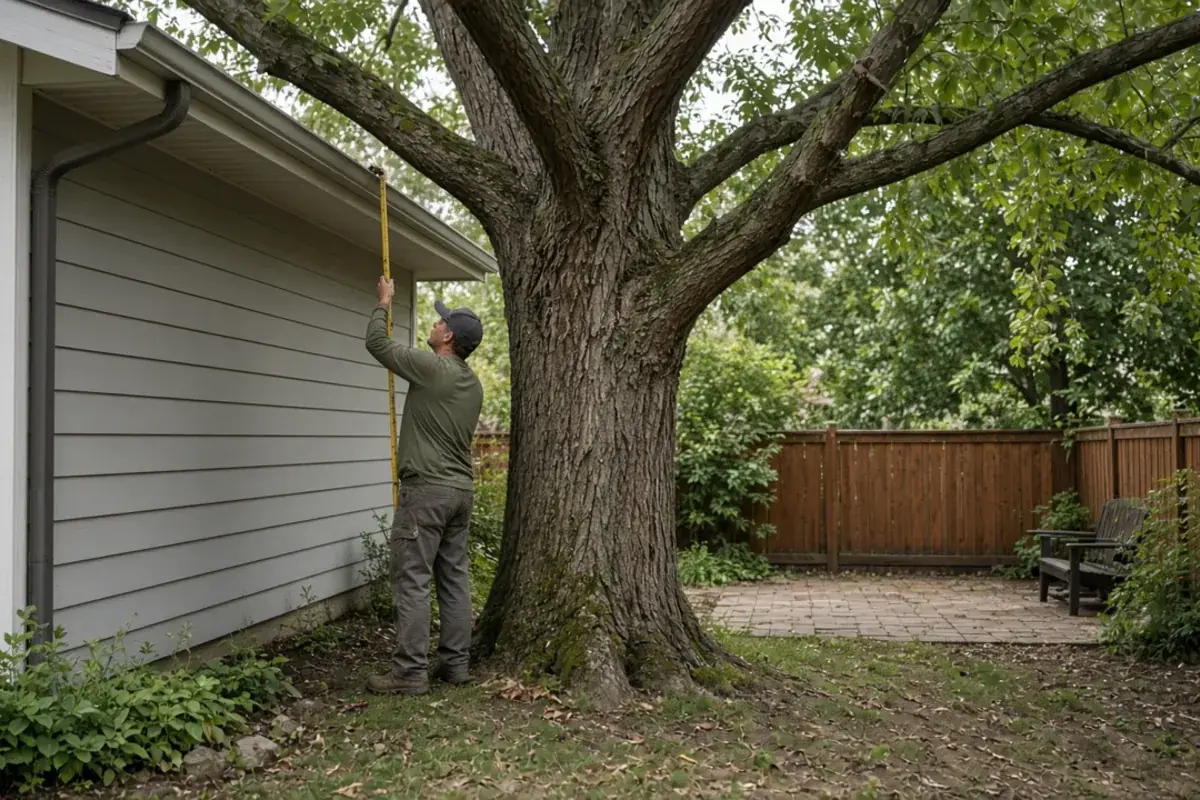
Tree roots damaging foundation: what it usually looks like
Tree roots damaging foundation work is a phrase homeowners use for a few different problems. True deep structural failure from roots is less common than people think, but roots do real damage to driveways, sidewalks, garage slabs and shallow stem walls. Typical signs:
- A driveway or walk with a long crack that tracks toward a large tree.
- A slab that has lifted on the tree side and makes a trip edge.
- Soil shrinkage and settlement after a big tree is removed and irrigation changes.
- Sewer or irrigation lines that keep clogging with fine roots.
- A basement or crawlspace wall with new cracks near a large trunk planted too close.
If you’re seeing stair-step cracks in a basement wall, bring in a structural engineer as well as a tree person. Don’t guess from a blog alone.
Why it happens in Boise yards
We water lawns in a dry climate. Roots go where the moisture and oxygen are, including the base of slabs and the gravel under driveways. Silver maples and poplars are famous for opportunistic roots; elms and willows can be aggressive too.
A big tree planted four feet from the garage twenty years ago made sense as a sapling. At maturity it’s a bad fit.
Options before you remove the tree
| Approach | When it can help | Limits |
|---|---|---|
| Prune the canopy | Reduces water demand a bit on a healthy tree | Doesn’t move roots already under a slab |
| Root pruning / barrier | Early conflicts, with room to cut selected roots | Hard on the tree if you cut too many major roots |
| Repair the hardscape only | Tree is a keeper and roots were a one-time issue | Roots often return through the same path |
| Remove the tree | Tree is too large for the spot or already in decline | You still need a plan for the stump and the slab |
An arborist check helps separate a tree worth keeping from one that’s already failing. If the trunk is sound but the placement is wrong, removal may still be the cleaner long-term answer.
When tree removal is the right call
Choose tree removal when the tree is damaging hardscape repeatedly, declining, or so close to the foundation that any serious root cutting would kill it anyway. Also consider removal when you’re about to replace a driveway or add on to the house; it’s cheaper to take the tree first than to pour new concrete and fight the same roots again.
If a branch or trunk failure is also a risk because of lean or dead wood, see is a leaning tree dangerous and dead tree near the house.
Why the stump matters for roots
Grinding a stump chews the wood below grade but leaves most of the root system in place to rot over time. That can be fine for a lawn. It’s a poor plan if you’re pouring a new driveway or building near the old trunk.
Full stump removal digs out the stump and the big root ball. For foundation or driveway rebuilds, that’s usually what you want. Compare the two in stump grinding vs stump removal.
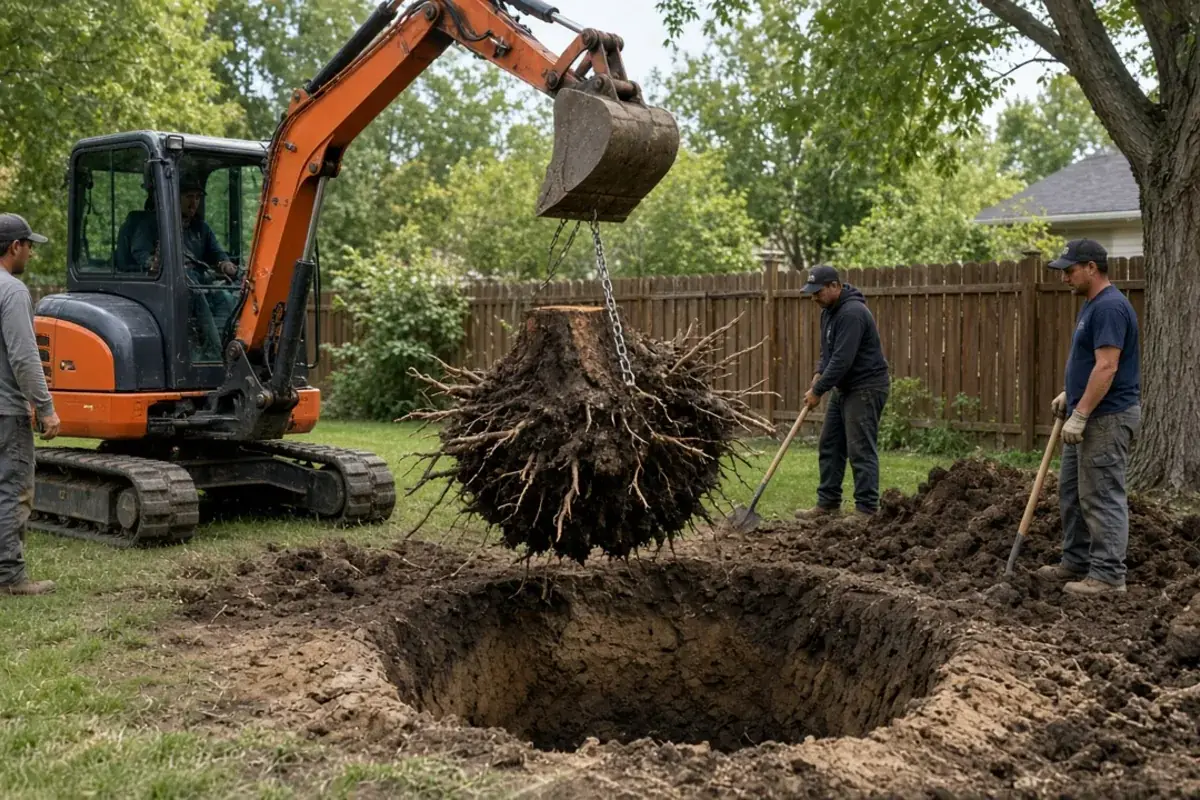
Tell us what’s cracking and how close the trunk is. We’ll say whether pruning, removal or stump work is the honest fix.
Coordinate with the concrete or plumbing work
Have the tree crew and your concrete or plumbing contractor talk before anyone digs. Call 811 before excavation. A root that cracked a slab may also have found a sewer joint.
We don’t pour concrete or re-pipe houses. We do remove the tree and stump so those trades can work in a clear site.
Planting so you don’t repeat the problem
If you replace the tree, pick a species that fits the final width of the canopy and keep it well off slabs and pipes. Our tree planting page covers placement. A smaller ornamental fifteen feet from the driveway beats another silver maple against the garage.
A practical timeline for Boise homeowners
Week one: photograph the cracks, the trunk distance and any plumbing backups. Call 811 before anyone digs. Get a tree check if the tree might stay.
Before a driveway pour or an addition: schedule removal and stump work first. Tree roots damaging foundation edges or a slab will keep pushing if the tree stays and the water stays.
After removal: expect the soil moisture pattern to change. Water new plantings carefully and let concrete cures finish before you judge a fresh crack.
FAQ
Common questions
Can tree roots really damage a foundation?
They can contribute to slab and shallow-wall problems, especially with water-seeking species next to old concrete. A structural engineer may be needed for serious foundation cracks.
Will cutting the roots save the driveway?
Sometimes for a minor conflict. Cut too many major roots and you can destabilize the tree. Get advice before you trench.
Should I remove the tree or just replace the concrete?
If the tree is still growing into the same space, new concrete often fails again. Removal first is usually smarter.
Do I need the stump dug out?
For a new driveway, patio or addition near the old trunk, full stump removal is usually better than grinding alone.
Who should I call first in Boise?
Start with a tree check if the tree might stay. Call 811 before any digging. Use a concrete or plumbing pro for the hardscape and lines.